
By James Lally
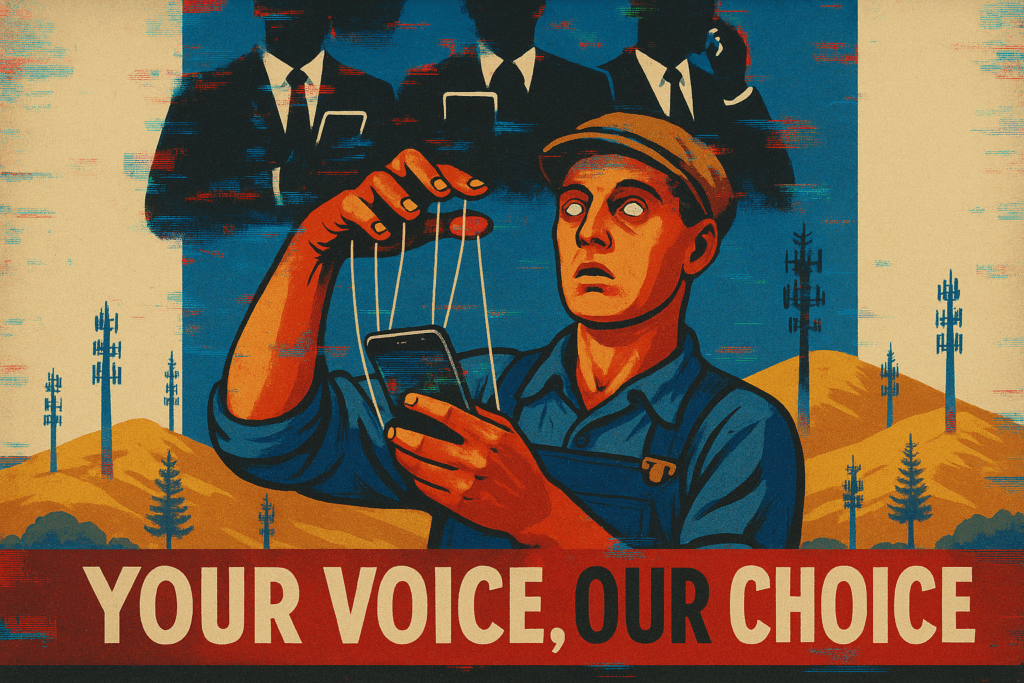
In November 2020, California voters faced Proposition 22, a ballot initiative funded primarily by Uber, Lyft, and DoorDash to exempt app-based drivers from state employment law. The campaign became the most expensive ballot measure in U.S. history, with spending surpassing $200 million. But beyond the record price tag, Proposition 22 became a case study in the use of psychographic targeting—digital advertising calibrated not just to demographics or geography, but to voters’ personalities, attitudes, and beliefs.
The strategy built on techniques popularized by Cambridge Analytica, which had demonstrated how psychological profiling could be used to microtarget persuasive messages on Facebook (Bakir, 2020; Matz et al., 2017). In Proposition 22, gig economy companies deployed similar tactics through programmatic platforms, serving tailored ads to users segmented by psychographic variables such as openness to innovation, economic anxiety, or preference for independence. Research shows such campaigns can exploit cognitive vulnerabilities to make messages more persuasive (Ali et al., 2019; Madsen & Pilditch, 2018).
The ethical dilemmas were stark. On one hand, political communication has always involved targeting—crafting appeals for union households, suburban parents, or small business owners. Yet psychographic targeting pushes this logic into intimate personal traits, often inferred from online behavior without meaningful consent (Kim et al., 2018; Ribeiro et al., 2018). Critics argue this transforms campaigns from broad public persuasion into individualized psychological influence, raising concerns about transparency, fairness, and manipulation (Shiner, 2019; Sapiezynski et al., 2024).
California’s campaign finance disclosure system requires reporting of spending but does not mandate disclosure of targeting strategies. Voters could see that Uber and Lyft had spent hundreds of millions, but not which voters were segmented into “fearful of government overreach” or “values entrepreneurial independence” buckets. Scholars argue that such opacity undermines democratic deliberation (Primo, 2013; Baum et al., 2021). While Facebook’s Ad Library was designed to provide oversight, its limitations left significant gaps in accountability (Mehta & Erickson, 2022).
For workers, the stakes were existential. Proposition 22’s passage enshrined gig workers’ independent contractor status, removing them from wage protections, unemployment insurance, and collective bargaining rights (Midgley, 2021). Research on algorithmic management underscores how such systems can erode worker well-being (Zhang et al., 2022; Hsieh et al., 2023). Thus, the psychographic campaign was not only a matter of voter persuasion but also labor rights.
The case illustrates the intersection of communication theory, law, and ethics. From a normative standpoint, deliberative democracy theory suggests voters require transparent, shared information to make informed decisions. Yet psychographic targeting fragments the electorate into opaque micro-audiences, reducing opportunities for collective debate. From a regulatory standpoint, California’s consumer privacy laws (CCPA/CPRA) offer some protections, but scholars note gaps in how political campaigns are treated compared to commercial advertising (Goldfarb & Tucker, 2011).
Stakeholders offered competing perspectives. Gig companies argued psychographic targeting allowed them to efficiently communicate the benefits of flexible work. Worker advocates countered that the campaign misled voters through manipulation, drowning out dissenting voices. Regulators faced the challenge of balancing free speech with the need for transparency. Scholars, meanwhile, highlighted the dangers of voter backlash to hyper-tailored messages, which can undermine trust in the democratic process (Gahn, 2024).
Proposition 22 also connects to broader global debates about the role of Big Tech in democracy. Scholars frame these practices as part of “digital rentiership,” where platforms and corporations profit from monetizing voter data and attention (Birch & Cochrane, 2021). The case demonstrates how ballot initiatives, once the epitome of direct democracy, now sit at the cutting edge of debates over surveillance capitalism, data privacy, and political persuasion.
The ethics of psychographic targeting remain unsettled. Is it simply the modern extension of persuasion, or a dangerous exploitation of cognitive vulnerabilities? Proposition 22 underscores that the answer will shape not only the future of political campaigns, but also the balance of power between voters, corporations, and workers.
Discussion Questions
1. Should psychographic and microtargeted advertising in ballot measure campaigns—particularly those involving gig economy companies such as Uber, Lyft, and DoorDash—be regulated differently than in commercial marketing, given the use of digital ad platforms and obligations under campaign finance and data privacy rules?
2. To what extent should psychographic targeting in ballot initiative campaigns be regulated differently from candidate election campaigns, given their unique role in shaping public policy directly through voter referenda?
3. How can transparency measures be implemented without undermining the effectiveness of political communication?
4. Do psychographic targeting techniques unfairly exploit cognitive biases in ways that harm democratic decision-making?
5. How might voter awareness and education mitigate the ethical risks of targeted political advertising?
References
Ali, M., Sapiezynski, P., Korolova, A., Mislove, A., & Rieke, A. (2019). Ad delivery algorithms: The hidden arbiters of political messaging. Proceedings of the 2019 ACM Conference on Fairness, Accountability, and Transparency (FAT* ’19), 1–13. https://dl.acm.org/doi/10.1145/3437963.3441801
Bakir, V. (2020). Psychological operations in digital political campaigns: Assessing Cambridge Analytica’s psychographic profiling and targeting. Frontiers in Communication, 5, 67. https://doi.org/10.3389/fcomm.2020.00067
Baum, K., Meissner, S., & Krasnova, H. (2021). Partisan self-interest is an important driver for people’s support for the regulation of targeted political advertising. PLOS ONE, 16(5), e0250506. https://doi.org/10.1371/journal.pone.0250506
Birch, K., & Cochrane, D. T. (2021). Big Tech: Four Emerging Forms of Digital Rentiership. Science as Culture, 31(1), 44–58. https://doi.org/10.1080/09505431.2021.1932794
Gahn, C. (2024). How Much Tailoring Is too Much? Voter Backlash on Highly Tailored Campaign Messages. The International Journal of Press/Politics, 0(0). https://journals.sagepub.com/doi/pdf/10.1177/19401612241263192
Goldfarb, A., & Tucker, C. E. (2011). Privacy regulation and online advertising. Management Science, 57(1), 57–71. https://papers.ssrn.com/sol3/papers.cfm?abstract_id=1600259
Hsieh, J., Adisa, O., Bafna, S., & Zhu, H. (2023). Designing individualized policy and technology interventions to improve gig work conditions. Proceedings of the 2nd Annual Meeting of the Symposium on Human-Computer Interaction for Work (CHIWORK ’23), Article 12, 1–9. Association for Computing Machinery. https://doi.org/10.1145/3596671.3598576
Kim, Y. M., Hsu, J., Neiman, D., Kou, C., Bankston, L., Kim, S. Y., … Raskutti, G. (2018). The Stealth Media? Groups and Targets behind Divisive Issue Campaigns on Facebook. Political Communication, 35(4), 515–541. https://doi.org/10.1080/10584609.2018.1476425
Madsen JK, Pilditch TD (2018) A method for evaluating cognitively informed micro-targeted campaign strategies: An agent-based model proof of principle. PLOS ONE 13(4): e0193909. https://doi.org/10.1371/journal.pone.0193909
Matz, S. C., Kosinski, M., Nave, G., & Stillwell, D. J. (2017). Psychological targeting as an effective approach to digital mass persuasion. Proceedings of the National Academy of Sciences, 114(48), 12714–12719. https://doi.org/10.1073/pnas.1710966114
Mehta, S., & Erickson, K. (2022). Can online political targeting be rendered transparent? Prospects for campaign oversight using the Facebook Ad Library. Internet Policy Review, 11(1). https://doi.org/10.14763/2022.1.1648
Midgley, Nate (2021) “Transportation Network Companies, Proposition 22, and the Future of Labor Relations in the United States,” Hatfield Graduate Journal of Public Affairs: Vol. 5: Iss. 1, Article 6. https://doi.org/10.15760/hgjpa.2021.5.1.6
OpenAI. (2024). Sora [AI video and image generator]. https://openai.com/sora/
Primo, D. M. (2013). Information at the margin: Campaign finance disclosure laws, ballot issues, and voter knowledge. Election Law Journal: Rules, Politics, and Policy, 12(1), 114–131. https://doi.org/10.1089/elj.2012.0179
Ribeiro, F. N., Benevenuto, F., & Gummadi, K. P. (2018). On microtargeting socially divisive ads: A case study of Russia-linked ad campaigns on Facebook. In Proceedings of the 2018 ACM Conference on Web Science (pp. 1–10). ACM. https://dl.acm.org/doi/10.1145/3287560.3287580
Sapiezynski, P., Ali, M., Korolova, A., Mislove, A., & Rieke, A. (2024). On the use of proxies in political ad targeting. Proceedings of the ACM on Human-Computer Interaction. https://dl.acm.org/doi/pdf/10.1145/3686917
Shiner, B. (2019). Big data, small law: How gaps in regulation are affecting political campaigning methods and the need for fundamental reform. Public Law, 2019(2), 362–379. https://repository.mdx.ac.uk/item/88032
Zhang, A., Boltz, A., Wang, C. W., & Lee, M. K. (2022). Algorithmic management reimagined for workers and by workers: Centering worker well-being in gig work. Proceedings of the 2022 CHI Conference on Human Factors in Computing Systems (CHI ’22), Article 14, 1–20. Association for Computing Machinery. https://doi.org/10.1145/3491102.3501866
AI Use StatementAIA HAb SeCeNc Hin R Elicit, ChatGPT-4o, ChatGPT-5 (OpenAI), Claude 4 Sonnet (Anthropic), and Sora (OpenAI) v1.