
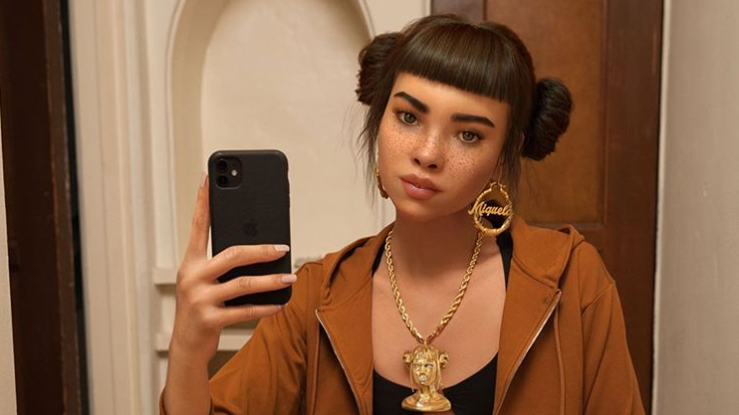
This case study will cover the ethical implications that artificial intelligence influencers can have on women’s bodies. With a focus on an artificial intelligence influencer called Lil Miquela, who has a substantial following on Instagram.
The concept of a perfect body for a woman has evolved significantly across different generations. In the fifties, women wore pencil skirts and swing dresses; in the eighties, it was the era of shoulder pads. In the nineties, ripped jeans and flannels became the trend. Unfortunately, during the nineties, a platform called Photoshop was launched. Photoshop allowed images to be altered, including photos of fashion models, to promote the “ideal woman’s body.” As we enter the new era of artificial intelligence, new ways of scrutinizing women’s bodies have been created.
Before artificial intelligence, social media was known to be a catalyst for creating body dysmorphia for women. Social media showcases influencers who have had cosmetic procedures to emphasize what is seen as the ideal woman’s body. Now that artificial intelligence has embarked onto the social media scene, Artificial Intelligence Influencers have surfaced. These artificial intelligence influencers, although popular, have started controversy. Lil Miqulela is one of the top-followed artificial intelligence influencers, racking in two point four million followers on Instagram. Though entirely fictional, Miquela interacts with followers, promotes fashion brands, and appears in music videos. Lil Miquela, the artificial nineteen-year-old influencer, was created in 2016 by the Los Angeles-based tech company Brud. The company gave her a narrative and a personality. Lil Miquela “was conceived as an exploration of digital artistry melded with modern AI technology, incorporating a unique fusion of music, social interaction, and brand advocacy” (Puran Parsani).
Many argue that artificial intelligence influencers like Lil Miquela are reinforcing unattainable body expectations in women. Lil Miquela’s representation as a woman of color raises questions about the commercialization of social issues and the potential for appropriation. This can lead to the reinforcement of stereotypes towards women of color, along with the hyper-sexualization of different races. Frida Cerna Neri from the University of Toronto argues that Lil Miquela’s platform “erases both political and historical dimensions of race.” Lil Miquela’s story for “advocacy for self-acceptance, self-love, and body positivity is hard to take seriously coming from the “mouth” of a flawless, digitally-created entity” (Kate). Many also have issues with Lil Miquela because her existence can be aligned and changed with current marketing, beauty, or fashion trends. Lil Miquela challenges the boundary between technology and the human experience. Her existence raises critical questions about authenticity, beauty standards, and societal change.
Discussion questions:
- Should Artificial Intelligence Influencers have the ability to keep up with current social media trends or be used in brand/marketing deals?
- Is it ethically appropriate for Lil Miquela, a virtual character, to represent marginalized communities? Since she has not lived their true experience.
- Will Artificial Intelligence influencers drive women to start unhealthy habits such as extreme diets, excessive exercise, and cosmetic surgery?
- Should artificial intelligence influencers be required to disclose that they are not human in all content they publish?
Sources:
Cerna Neri, Frida . “View of Artificial Intelligence or a Neoliberal Marketing Scheme? The IJournal: Student Journal of the Faculty of Information.” Theijournal.ca, 2025, theijournal.ca/index.php/ijournal/article/view/38617/29557.
Fustich, Katie. “Instagram Influencer and AI Model Lil Miquela Foreshadows the Shaky Future of Female Autonomy.” Medium, 7 Apr. 2019, katefustich.medium.com/instagram-influencer-and-ai-model-lil-miquela-foreshadows-the-shaky-future-of-female-autonomy-314c15e15a6e.
Kate, Elsiena ten. “New Phenomenon of Virtual Influencers: The Paradox of Lil Miquela | Salience.” Salience Fresh, University of Sydney, 21 June 2021, www.salienceatsydney.org/blog/2021/06/21/new-phenomenon-of-virtual-influencers-the-paradox-of-lil-miquela/