
This case study explores the ethical responsibilities society holds toward protecting the developing juvenile brain in an age where digital connectivity is constant. The analysis integrates neuroscience research, ethical theory, and real-world events involving fear-based online trends.
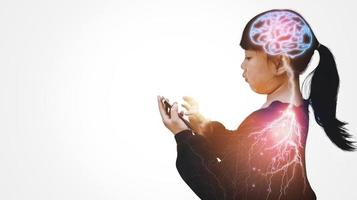
Horror-themed viral challenges, such as the Momo Challenge and Blue Whale Challenge, have spread across platforms like TikTok, YouTube, and Instagram for over a decade (Adeane) (Kobilke, L., & Markiewitz). These trends often combine frightening images, elements of peer pressure, and escalating tasks that may include self-harm or other dangerous acts (McCambridge). While some are fabricated hoaxes, their psychological impact on young audiences is genuine. The highly publicised Slender Man stabbing incident of 2014 demonstrates how susceptible young people can be to such content (Helmore).
Real-World Examples
- Momo Challenge (2018–2019) — Spread fear through claims of a creepy character coercing children into dangerous acts. Though largely debunked, it caused widespread parental panic.
- Blue Whale Challenge (2016–2017) — Allegedly guided participants through tasks leading to self-harm. While its scale is debatable, multiple countries issued public safety warnings.
- Slender Man Stabbing (2014) — Two 12-year-old girls attacked a peer, citing influence from online horror lore.
- TikTok ‘Blackout Challenge’ (2021–present) — Reports of children attempting dangerous asphyxiation stunts for viral attention.
Adolescence includes extensive neural remodeling, including synaptic pruning, myelination, and connectivity refinement, that continues into the early to mid-20s. The limbic system develops before the prefrontal cortex, leading to an imbalance where emotion and reward circuits mature before cognitive control networks fully develop. This mismatch fuels heightened emotional reactivity, sensitivity to peer influence, and reward seeking, while the mechanisms responsible for impulse control and risk evaluation trail behind (Giedd). As a result, when adolescents engage with emotionally or fear-charged viral content, they are especially vulnerable to impulsive engagement because they are acutely primed, neurologically, to reward and social cues but are still developing the ability to see the long-term implications.
97% of teens in the US report using the internet daily, with nearly half claiming to use the internet “almost constantly” (Vogels). In a chronically online society, where does responsibility lie for shielding adolescents from manipulative, fear-based digital content? Should the burden rest primarily on individuals and parents, or systemic safeguards enforced by platforms and policymakers? How do we balance youth autonomy with protective oversight?
Discussion Questions
- Should social media platforms use stronger age-based filters, even at the cost of limiting legitimate teen content creation?
- Does the profit model of engagement-driven algorithms inherently conflict with adolescent well-being?
- How can schools integrate neuroscience-based digital literacy programs to help teens critically assess online content?
- Should legislation mandate youth-protective algorithms, or would that introduce problematic surveillance and privacy risks?
Relevant Ethical Theories
- Utilitarianism — Balancing the societal benefit of open communication against the harm caused to vulnerable youth.
- Deontology — Upholding a moral duty to protect minors, regardless of potential profit loss for platforms.
- Virtue Ethics — Encouraging compassion, responsibility, and integrity in the actions of educators, parents, and tech companies.
AIA Ph Se Hin R Grammarly (v1.2.182.1722) v1.0
Sources:
Adeane, A. (2019). Blue Whale: What is the truth behind an online “suicide challenge”? Retrieved from https://www.bbc.com/news/blogs-trending-46505722
Kobilke, L., & Markiewitz, A. (2022). The momo challenge: Measuring the extent to which YouTube portrays harmful and helpful depictions of a suicide game – SN Social Sciences. Retrieved from https://link.springer.com/article/10.1007/s43545-021-00065-1
McCambridge, S. (2025). Another tiktok “blackout challenge” death confronts the limits of CDA Section 230 immunity, published in the New York Law Journal. Retrieved from https://www.segalmccambridge.com/blog/another-tik-tok-blackout-challenge-death-confronts-the-limits-of-cda-section-230-immunity-published-in-the-new-york-law-journal/
Helmore, E. (2025). Slender man case: Woman who stabbed classmate to be released from Psychiatric Hospital. Retrieved from https://www.theguardian.com/us-news/2025/jul/17/slender-man-case-release-psychiatric-hospital
Giedd, J. N. (2024). Risky teen behavior is driven by an imbalance in brain development. Retrieved from https://www.scientificamerican.com/article/risky-teen-behavior-is-driven-by-an-imbalance-in-brain-development/
Vogels, E. A. (2022). Teens, social media and technology 2022. Retrieved from https://www.pewresearch.org/internet/2022/08/10/teens-social-media-and-technology-2022/