
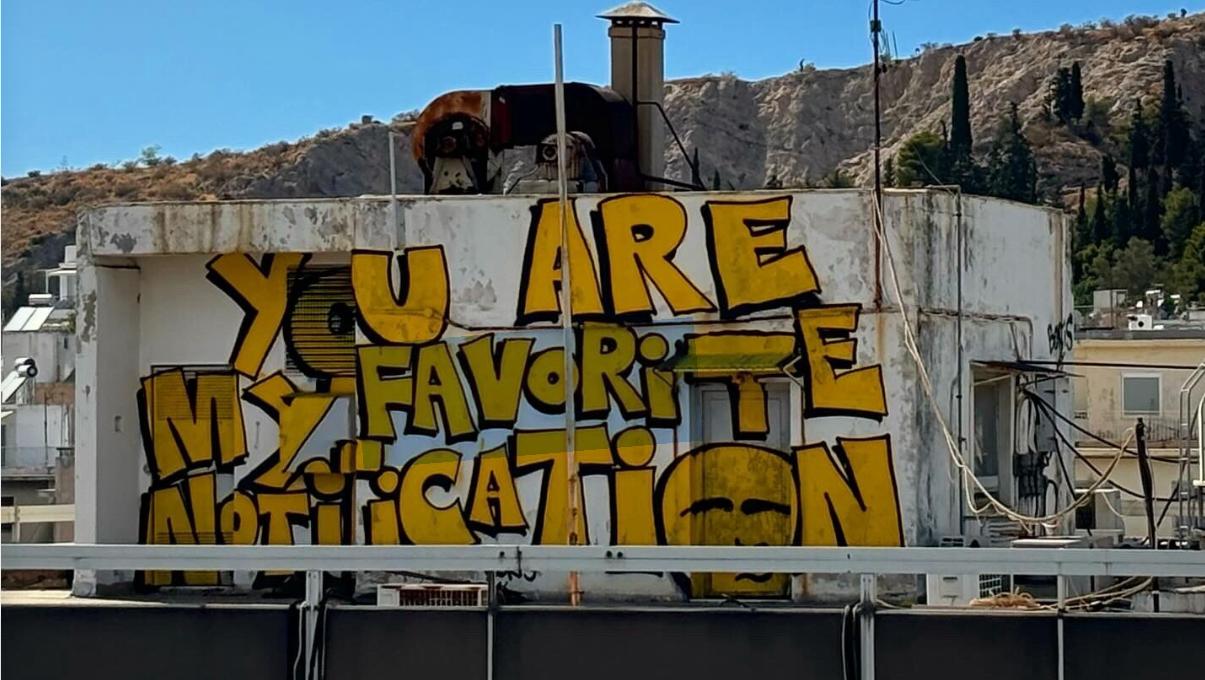
My most recent book publication, LiveJournal and Russian Disinformation: The Rise of Epistemic Sabotage explored the rise of fascism in Russia and how the Russian government has been able to weaponize social media to wage a form of cyber warfare against other countries like Georgia, Ukraine, the U.S. and the U.K., among others. Working on this project raised questions about how and why Russian troll factories were able to use these tools for such operations with such relative ease. The unsettling answer that I landed on is that the vast majority of our current social media platforms are designed in ways that tend to facilitate our microfascist desires. How might we push back against this?
Thanks to financial support from the Amelia V. Gallucci-Cirio Endowment, I was able to spend the summer of 2024 in Italy conducting archival research at the Antonio Gramsci Foundation and Museum of Liberation in Rome, as well as the public memorials in Bologna and beyond. I examined the anti-fascist rhetoric of WWII to ask how we might transform those strategies into new approaches to social media use and platform design today.
Targeted Calls To Action
One obvious parallel immediately emerged. Resistance flyers were addressed to very specific audience, such as mothers or postal and telegraph workers. Each of these then provided precise calls to action that were specifically relevant to that audience. Mothers, for example, could provide food or clothing to other children who were “naked and malnourished” because the Nazi-Fascist occupiers were stealing milk and sugar. Postal and telegraph workers could damage infrastructure used by the fascist government or block specific messages from delivery.
These flyers offered a clear set of instructions that could be acted on immediately to disrupt power. Perhaps most importantly, they rhetorically situated the resistance movement as a collaborative striving toward survival against a a sitting government that was treasonous.
Virality vs. Solidarity
Our current digital platforms are designed for virality by using algorithms that take into account engagement metrics such as likes, shares, and comment counts. These metrics, intentionally or not, most often and frequently surfaces content that is incendiary and polarizing, because that is the material that best captures attention. This type of content consequently tends to harm democratic norms.

If we were to redesign social media platforms drawing on the lessons of the Italian anti-fascist movement, what might that look like?
- Eliminate algorithmic feeds that prioritize engagement metrics: Replace them with chronological or values-driven group feeds where content is surfaced based on shared interests or community goals. Eliminate likes/comment counts.
- Historic Memorials: Much like statues, dedicate spaces in the platform to memorializing important values.
- Community Governance: Nathan Schneider (2024) has advocated widely for this approach and offers strong suggestions for how to go about this that include ideas like elections for group chat leaders and juries for controversial posts, use video to do so. Highlight trust of individual accounts.
- Foster Localized, Action-Oriented Communities: Design tools that support hyper-local offline collaboration and community participation.
- Emphasize Imagined Futures: Bringing together function and content, we might completely re-envision the traditional social media approach in which one user authors individual posts. How might we integrate this with more collaborative approaches? What would a social media platform look like if it featured spaces, groups, or pages that could be collaboratively edited, much like Wikipedia or even Google Docs? How might these spaces allow us to think and tell stories collectively, while developing positive visions of our collective future?
- Emphasize group spaces over individual timelines: Prioritize forums, discussion threads, and collective projects over personal broadcasting. Think message boards or co-created posts and community viewing.
- Highlight mutual aid tools: Include features like “offers and needs” boards, group resource lists, or collaborative event planning.
- Inclusivity and Diversity: Platforms can be built with features that nudge users toward greater inclusivity.
I’m working to incorporate this research into my next book, tentative titled Designing Against Microfascism. Stay tuned for more updates!


